
Description
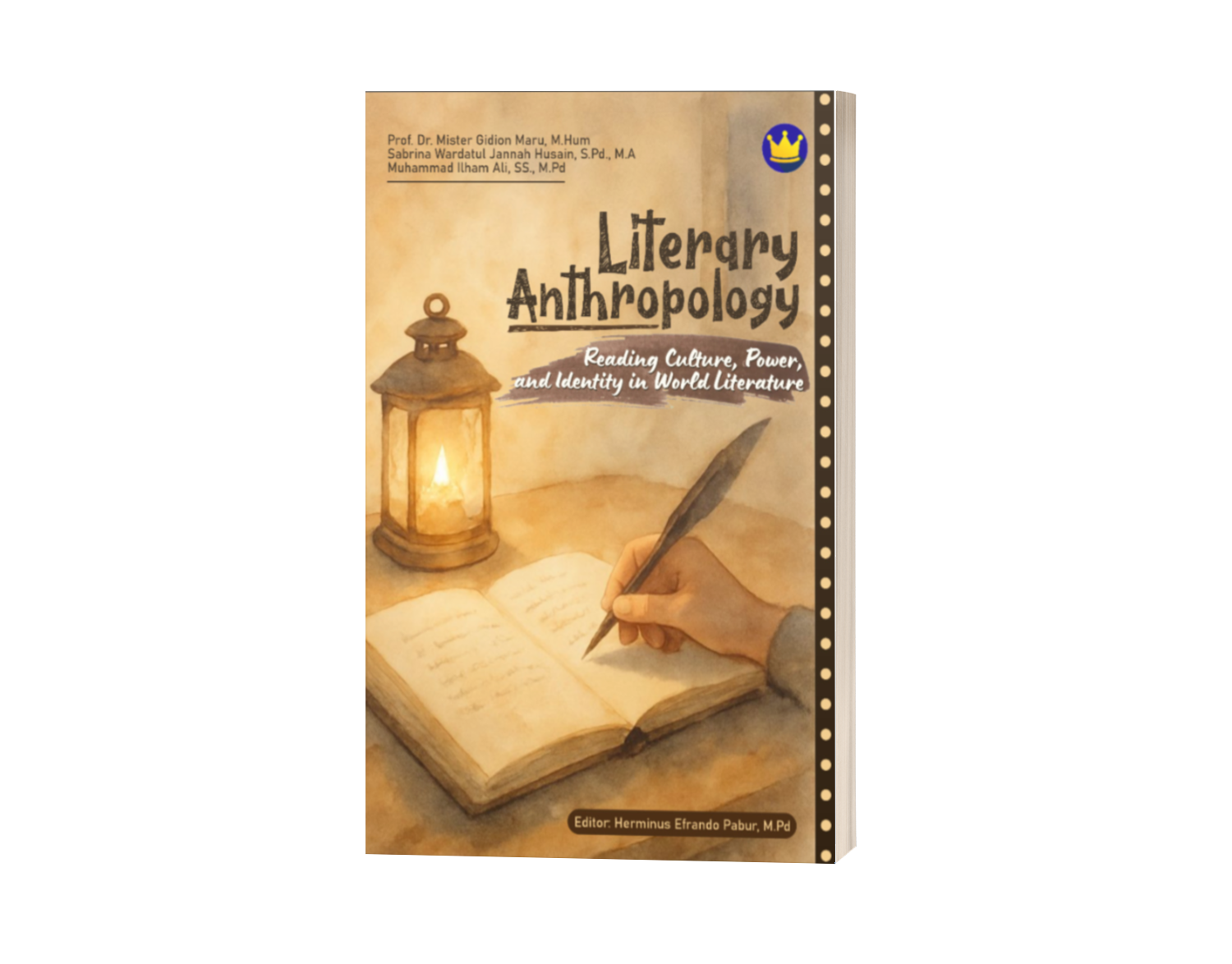
JUDUL EBOOK : LITERARY ANTHROPOLOGY: READING CULTURE, POWER, AND IDENTITY IN WORLD LITERATURE
PENULIS : Prof. Dr. Mister Gidion Maru, M.Hum., Sabrina Wardatul Jannah Husain, S.Pd., M.A., Muhammad Ilham Ali S.S., M.Pd.
EDITOR : Herminus Efrando Pabur, M.Pd.
HALAMAN : vii, 290
SINOPSIS :
This extensive theoretical and methodological book delves into the critical intersection of literary anthropology, illustrating how written and oral narratives function as crucial cultural documents rather than simple aesthetic objects. By bridging the gap between literary criticism and field ethnography, the book reimagines literature as a dynamic place for recreating social realities, investigating human experiences, and fighting power dynamics. It traces the evolution of foundational anthropological thought—from James George Frazer’s comparative mythologies and Claude Lévi-Strauss’s structural analysis to Victor Turner’s ritual performativity and Clifford Geertz’s thick description—while also dismantling Western literacy biases with Walter J. Ong’s orality theories. This profound theoretical foundation is illuminated by a rich tapestry of global and local narratives, ranging from the classical Epic of Gilgamesh and I La Galigo to Nusantara’s oral traditions such as Mak Yong and Didong, and eventually extending its analysis into the contemporary realm of secondary orality in the digital age.
Moving fluidly beyond pure theory, the narrative delves into the political and institutional implications of literature, investigating the text as a ferocious battleground for power and representation. Drawing on the insights of Antonio Gramsci and Michel Foucault, the book examines how dominant organizations use speech and genre to legitimize power, thereby marginalizing or silencing subaltern voices. This systematic oppression is historically contextualized by Indonesia’s own record of ideological censorship, such as the suppression of the Institute of People’s Culture (LEKRA) and the institutional ban on Pramoedya Ananta Toer’s Buru Quartet during the New Order era. In contrast, the text emphasizes how literature serves as a resilient weapon for the oppressed, employing James C. Scott’s concept of hidden transcripts to explore daily resistance through protest songs, the subversive folklore of trickster figures such as Si Kancil, Kabayan, and Abu Nawas, as well as modern creative counter-narratives found in stand-up comedy.
This academic journey also addresses the contemporary ecological shift and the difficult creation of identity within the modern nation-state. Through the dual lenses of ecocriticism and disaster anthropology, the book demonstrates how literature preserves crucial ecological memories and indigenous semiotics, as famously exemplified by the survival archive of the Smong oral tradition in Simeulue, which saved thousands of lives during the 2004 tsunami, as well as traditional conservation systems rooted in sacred prohibitions (pali). This ecological awareness is deeply intertwined with an analysis of national identity forged by Benedict Anderson’s print capitalism, providing a critical critique of how class, gender, and ethnic minorities—particularly Papuan and Chinese-Indonesian communities—have historically been excluded from the collective national imagination. The discussion concludes by delving into the moving stories of post-1965 political exiles, Homi Bhabha’s “third space” of cultural hybridity, and the ongoing post-Reformasi conflict between the revitalization of endangered regional languages and the dominance of a centralized national literature.


Reviews
There are no reviews yet.